
 EN



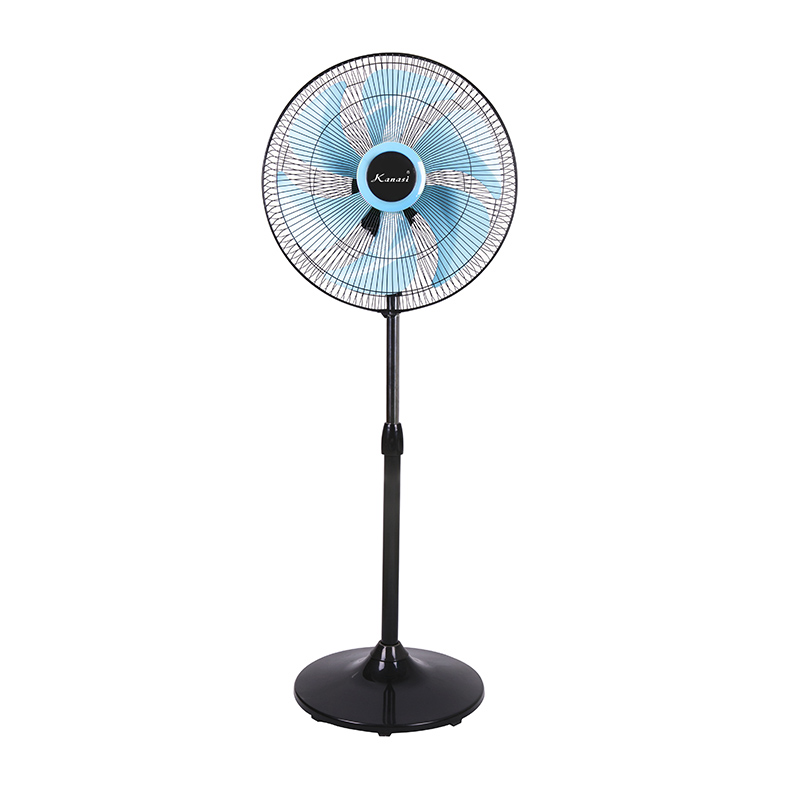
Workshops, gyms, event halls, and warehouse floors need air movement that adapts to people rather than the reverse. The B360 is a stand fan adjustable across a wide height range, with tilting head, wide oscillation, and a motor built for long shifts. Not a household appliance stretched into commercial work, it starts from contractor feedback: stable base, quick height changes, and airflow that reaches the far corner of the room.
Adjustments for Daily Use
Height, Tilt, and Oscillation
A stand fan adjustable in height earns its place on a floor where tasks change by the hour. The B360 telescopes from roughly 1.2 to 1.6 metres through a cam-lock collar that holds firm after thousands of adjustments, while the head tilts to aim airflow at a workbench or a bench press. Oscillation sweeps a broad arc covering a row of stations, driven by a geared motor that resists the stalling common in cheaper crank designs.
Why Geared Oscillation Lasts Longer
Crank-style oscillation relies on a sliding pin that wears into a groove, producing a familiar clunk and eventually a dead spot. A geared drive spreads wear across meshing teeth and keeps the sweep rhythm steady for seasons of continuous duty. That matters for any stand fan adjustable across a wide arc, because a stalled sweep leaves one half of the room hot. Combined with thermal overload protection inside the motor, the mechanism shrugs off the stalls and heat soak of eight-hour shifts.
Matching Airflow to Tasks
Air Speed, Throw, and Comfort
Occupants judge a fan by air speed where they stand, not CFM at the grille. AMCA 230 test methods for air circulating fans let buyers compare velocity and throw claims instead of trusting marketing numbers. A stand fan adjustable in tilt, like the B360 with deep-pitch blades, moves a solid column of air several metres, cooling a machinist while leaving delicate paper or powder undisturbed. OSHA guidance on workplace heat stress encourages exactly this local air movement within a wider cooling plan.
A Workshop Rollout Case
A metal fabrication shop's operations supervisor battled afternoon heat pushing workers away from welding benches. Twelve B360 units went in, each stand fan adjustable to waist height beside benches, then raised to full height for floor-wide coverage at shift change. Operators reported noticeably cooler working positions within the first week, break-time heat complaints dropped sharply, and because head tilt aims airflow away from welding shields, shielding gas coverage stayed consistent.
Running and Caring for Floor Fans
What to Check Before Ordering in Bulk
Inspect the base first — a wide, weighted footprint with rubber feet prevents the topple risk of lighter units. Confirm the cam-lock collar grips without slipping after repeated height changes, ask for the motor's insulation class and thermal protection spec, and request container-friendly packaging so cartons survive transit. Sampling a stand fan adjustable unit from the actual production batch and running it continuously for a day reveals more than any datasheet.
Daily Habits That Extend Service Life
Keep intake grilles clear of dust; a choked intake heats the motor and shortens winding life. Check the collar screw monthly in high-use gyms, wipe blades with a damp cloth during shutdowns, and store units dry between events. A stand fan adjustable enough to lower for cleaning saves ladder time, which is why crews favor it over fixed ceiling units in rented halls and seasonal workshops.
From factory floors to fitness studios, a stand fan adjustable in height, tilt, and sweep adapts to people instead of forcing people to adapt. This oscillating floor fan packs contractor-grade adjustments, geared sweep, and thermal protection into a unit designed for container-scale export, with production flexible on voltage, plug types, and finish color. Buyers who verify base stability, adjustment hardware, and motor specifications early rarely face the callback problems plaguing lighter-grade imports.
Frequently Asked Questions
What height range suits floor fans?
Most buyers want coverage for both seated work and general floor cooling, which is why the B360 telescopes from roughly 1.2 to 1.6 metres. Bench-level positioning puts air speed right where a machinist or stylist stands, while full height throws air over machinery and shelving. A stand fan adjustable through that range replaces two fixed units, cutting both purchase cost and floor space.
Why does tilt matter so much?
Oscillation covers a row of people; tilt aims a column of air at one task. Welding benches, spray areas, and gym stations each need airflow aimed precisely, and a head that tilts through a wide arc lets supervisors redirect cooling without moving the base. Fixed-angle fans waste much of their output on empty floor, which is why tilt hardware earns its keep in mixed-use halls.
Can the motor handle eight-hour continuous duty?
The B360's motor carries thermal overload protection and insulation rated for sustained running, so a full workshop shift does not overheat the windings. Keeping the intake grille clear of dust is the operator's main duty, since a choked intake is the most common cause of premature failure. Hot-climate units benefit from a mid-shift shutdown for a quick grille wipe and cord check.
How should fans be stabilized on uneven floors?
Start with the base: a wide, weighted footprint with rubber feet resists topple on rough concrete. Level the unit by adjusting its position rather than wedging, confirm the cam-lock collar grips firmly after height changes, and route the cord away from walkways. In busy workshops, placing fans behind barriers or between benches protects both the unit itself and passing forklift traffic.
When should pivot hardware be maintained?
Monthly checks suit gyms and workshops running daily; event-hall units can follow a per-season schedule. Wipe the telescoping tube, confirm the collar locks without slip, and test the tilt joint for free movement with no wobble. A drop of light oil on the tilt pivot keeps aiming smooth. Early attention to these points prevents the loose-head wobble that eventually makes a fan unusable.