
 EN



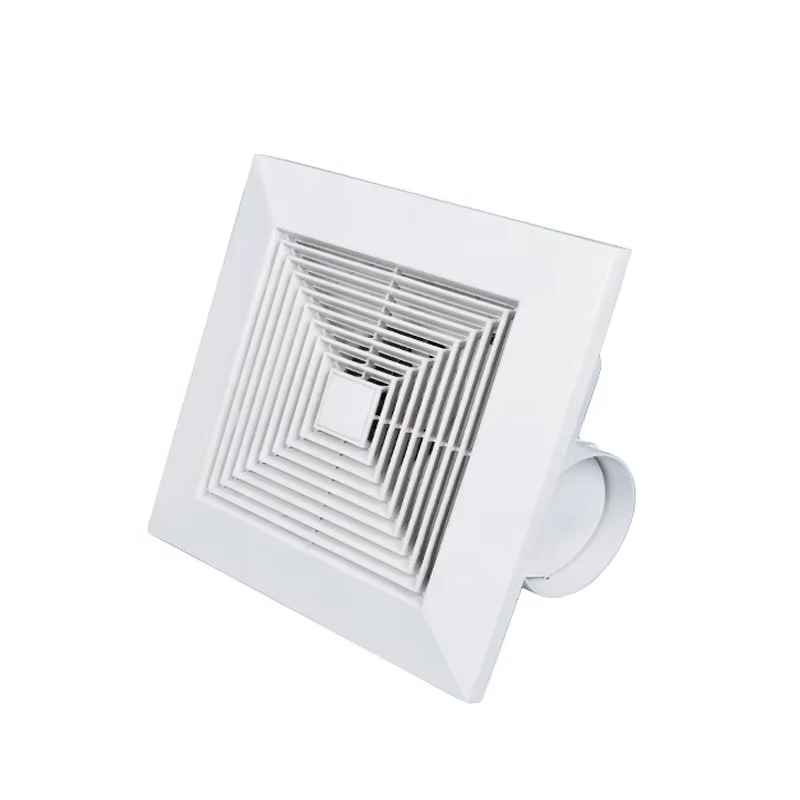
Noise has become a purchase criterion for misting equipment rather than an afterthought. Hotels, restaurants, and greenhouse operators increasingly ask how loud a water spray fan will be before signing, because a unit that cools well but hums loudly can spoil a terrace evening. The workbook below covers why noise matters commercially, how sound power testing isolates sources, and how a measurement sheet turns dB(A) readings into defensible specification data.
Case Study: Misting Fans for a European Hotel Group
Why Every Water Spray Fan Was Sound Tested On Site
A resort group managing hospitality patios along the Mediterranean coast approached Kanasi with a familiar complaint: previous misting units cooled effectively but produced a drone guests noticed at dinner. Housekeeping logs recorded repeated table-relocation requests, and the buyer demanded documented acoustic evidence, not catalog claims. Because the evaporative cooling units would sit within a few meters of dining tables, every proposed water spray fan needed characterization at realistic distances, separating pump and airflow sources. Kanasi, with an independent R&D center inside an 80,000 square meter Shunde plant, ran the tests before shipment.
How the Test Program Was Structured
The factory team built the workbook around ISO 3744, which derives sound power levels from sound pressure readings taken around a machine. Measurements used fixed distances on an open pad, with background noise correction applied so traffic and wind did not distort results. Each water spray fan ran three repeated cycles to establish test repeatability, and the noise spectrum was logged one meter above the terrace floor and at the table edge. Pump vibration was isolated by running the misting module with airflow disabled, then compared against blade-only operation.
What the Results Showed
The hotel group selected units whose measured levels at dining distance stayed under its internal acceptance threshold, and no noise-related relocation request has been reported since installation. The workbook entered the tender file, giving procurement staff objective evidence rather than marketing copy. The project extended a 98% quality pass rate culture: acoustic checks now sit beside airflow testing aligned with ISO 5801 and ANSI-AMCA 210, so each water spray fan leaves the factory with performance curves and sound data.
Water Spray Fan Noise: Risks, Sources, and Standards
Why Noise Mistakes Carry Commercial Costs
Guests on a hospitality patio who cannot hold a conversation drift indoors, and outdoor dining revenue follows. Wrong placement compounds the problem: a misting fan pushed into a corner reflects sound off hard surfaces, while a unit too close to seating turns cooling into an irritant. Pump cavitation adds another failure mode, because a starving inlet line produces a gravelly rattle that no blade balancing can mask.
How Blade and Pump Sources Differ
Blade noise is aerodynamic and scales with tip speed, so large slow blades at a moderate blade pitch stay quieter than small fast ones moving the same air. Pump noise is mechanical: pressure pulsation and pump vibration travel through the chassis, so rubber mounts and stable inlet pressure matter as much as aerodynamics. A single sound power level figure merging both sources hides the distinction, so the workbook logs each water spray fan source separately.
Turning Water Spray Fan Data Into Defensible Specifications
Which Standards Anchor the Measurement Method
Three references anchor the method. ISO 3744 governs the sound pressure technique, ISO 5801 and ANSI-AMCA 210 cover air performance, and OSHA ambient-noise guidance covers occupied spaces. In practice, the sheet records distance, background level, source level, and correction at every point, flagging readings that drift beyond tolerance between repeats.
What Placement Notes Prevent Complaints
Placement notes close the file: keep units clear of reflective walls, aim mist away from conversation zones, and record where guests gather. These details turn a measured sound power level for each water spray fan into an installation instruction the site team can follow. The frequently asked questions below distill the points buyers raise at tender stage.
Frequently Asked Questions
What Measurement Distance Should Be Used for Patio Misting Fans?
Most hospitality projects test where people actually sit: typically one meter above floor level and two to three meters horizontally from the unit centerline. Industrial buyers sometimes apply 1.5 meter templates. Whichever distance is chosen, keep it consistent across every unit and retest, because sound pressure falls with distance and comparisons collapse if geometry shifts.
Why Does Pump Noise Differ From Blade Noise?
Blade noise is aerodynamic, rising with tip speed and turbulence, so it responds to diameter, blade pitch, and rotation speed. Pump noise is mechanical: pressure pulsation inside the pump and vibration transmitted through mounts create a tonal rattle tied to feed pressure. Testing separates the two by running the misting module with airflow disabled, then comparing spectra.
How Does Background Noise Correction Work?
The tester measures ambient sound with the unit off, then again with it running. ISO 3744 supplies correction rules: if the difference exceeds 10 dB, background influence is negligible; between 3 and 10 dB, a defined correction is subtracted; below 3 dB the reading is invalid. This stops a quiet unit being judged against traffic or wind noise.
Which Standard Applies, ISO 3744 or ANSI-AMCA 210?
ISO 3744 describes how sound power is derived from pressure measurements around a machine, so it governs acoustic data. ISO 5801 and ANSI-AMCA 210 define laboratory methods for airflow, pressure, and efficiency curves, so they govern cooling and air delivery claims. A complete specification sheet cites both, pairing each airflow figure with an acoustic level measured under comparable conditions.
When Should a Misting Fan Be Rejected at Acceptance?
A water spray fan should be rejected when measured levels at the agreed distance exceed the acceptance threshold written into the purchase specification, when repeated readings drift outside the tolerance band, or when cavitation rattle appears at normal feed pressure. Acceptance sheets should also confirm that dB(A) values match published figures within the stated margin, protecting the buyer in disputes.