
 EN



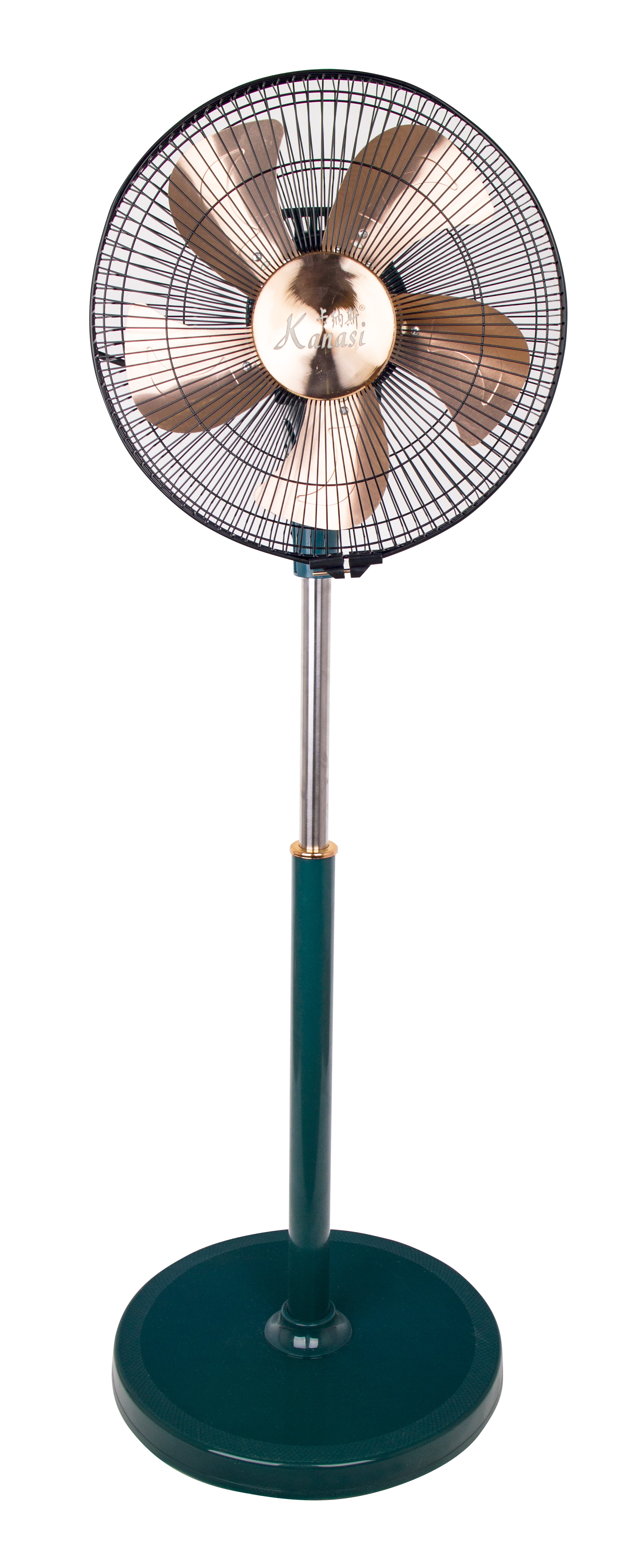
In a large room, air behaves like water: it pools, layers and goes stale wherever circulation is weak. That is the problem a tall floor fan solves, lifting the intake point and pushing a column of air across space that low units only stir. The Lambertzs B306 applies this idea to warehouses, gyms, halls and showrooms, where coverage radius matters more than compact size. Buyers comparing options should focus on how high the discharge sits, not how tall the stand looks.
Why Height Reshapes Airflow
The Physics of Throw and Coverage
Elevating the intake changes two variables at once. First, the fan draws from cleaner air above floor level instead of recycling its own warm exhaust. Second, discharge height extends throw distance, because a stream launched higher travels farther before turbulence breaks it up. A tall floor fan placed centrally can sweep a radius several low units cover only together. Blade pitch, not just diameter, drives this: steeper pitch moves more air per revolution, raising CFM without the noise penalty of raw speed. Spec sheets reward CFM airflow figures over blade size alone.
Inside the B306
As a tall floor fan, the B306 pairs a copper-wound motor with three aluminum blades pitched for long-distance delivery. Multiple speed settings let operators match airflow to the task, from gentle circulation during office hours to full output on hot afternoons. Thermal overload protection guards the motor, and a wide weighted base resists tipping when the head swivels. An oscillating fan covering a broad arc serves several zones from one position instead of a single aisle.
Case Study: A Dallas Warehouse
Stratified Air and Dead Zones
A warehouse operations lead in Dallas managed a distribution floor with tall racking, where summer heat pooled under the roof while pickers worked in still air at ground level. Portable coolers served one zone and ignored the rest, heat complaints climbed during afternoon shifts, and management weighed renting additional spot coolers for the season before trialing a tall floor fan instead. Workplace heat guidance, including OSHA guidance on ventilation and heat stress, made air movement a formal concern rather than a comfort debate.
Results on the Floor
The team installed several B306 units along the main aisles, set to oscillate across picking zones. Staff near packing stations reported noticeably steadier air movement within the first week, and afternoon heat complaints dropped sharply compared with the previous summer. Because each tall floor fan covered radius that portable coolers never reached, the planned cooler rentals were cancelled, avoiding a significant seasonal expense. Supervisors also noted faster recovery after dock doors opened, since moving air shortened the wait between trailer arrivals.
Choosing and Running a Tall Unit
A Buyer's Checklist
Compare tall floor fan candidates on tested airflow rather than blade size, and ask whether performance data follows AMCA or ANSI testing methods, which measure air performance consistently between brands. Check head height against racking and shelving, confirm the oscillation angle suits the floor plan, and weigh the base against floor traffic. For continuous operation, verify thermal overload protection and the motor duty rating, since an eight-hour shift is a different life from a showroom demo.
Placement, Safety and Upkeep
Position units where the airstream crosses work zones, not directly at seated staff, and keep cords routed away from forklift paths. This kind of warehouse cooling improves further when air travels over obstructions rather than through them. Clean grilles monthly to protect airflow, since dust on blades quietly cuts output. Check head-tilt fasteners periodically, because vibration loosens them, and listen for bearing noise before peak season; catching wear early costs minutes.
Air movement problems in big rooms are geometry problems, and height is the simplest variable to change. A tall floor fan like the B306 turns vertical positioning into wider coverage, steadier circulation and lower equipment spending per square meter. Placement does the work that extra units used to do. For operators of warehouses, halls and gyms, it remains one of the most direct upgrades available.
Frequently Asked Questions
What Height Suits a Tall Fan?
Match head height to the space: a tall floor fan around chest height or above clears racking and furniture that blocks low-mounted airflow. As a rule, the taller the obstacle profile in the room, the higher the intake should sit. The B306 head sits well above typical clutter, letting air travel over workstations instead of bouncing off them.
Why Does Elevated Intake Improve Circulation?
Low intake recycles warm, dust-laden air hugging the floor, while elevated intake draws from a fresher layer and discharges across a longer path. The longer path means the airstream mixes a bigger volume before slowing. Combined with oscillation, one elevated unit therefore refreshes several zones that would otherwise need multiple smaller fans. That mixing effect matters most in rooms with high ceilings.
How Much Area Can One Unit Cover?
Coverage depends on throw distance, oscillation arc and obstructions rather than floor area alone. In open layouts, a high-output tall floor fan can keep air moving across a radius of several meters in every direction. Racking, partitions and machinery cut that radius, so buyers should map obstacles before choosing positions instead of dividing total square meters by fan count.
Can Tall Fans Replace Ceiling Units?
In rented buildings, structurally unsuitable roofs or sprinkler-sensitive spaces, they often can. Floor units install in minutes, relocate with the floor plan and avoid ceiling penetrations entirely. Airflow patterns differ, since ceiling fans mix vertically while tall floor fans push horizontally, so large facilities sometimes combine both rather than choosing strictly one.
Do They Use Much Power?
Consumption tracks motor size and speed setting, and modern fan motors are efficient relative to the air they move. Running a tall fan at moderate speed typically costs far less than mechanical cooling, which is why warehouses pair the two: fans raise cooling setpoints while keeping occupants comfortable. Check the specification sheet for rated wattage per speed.