
 EN



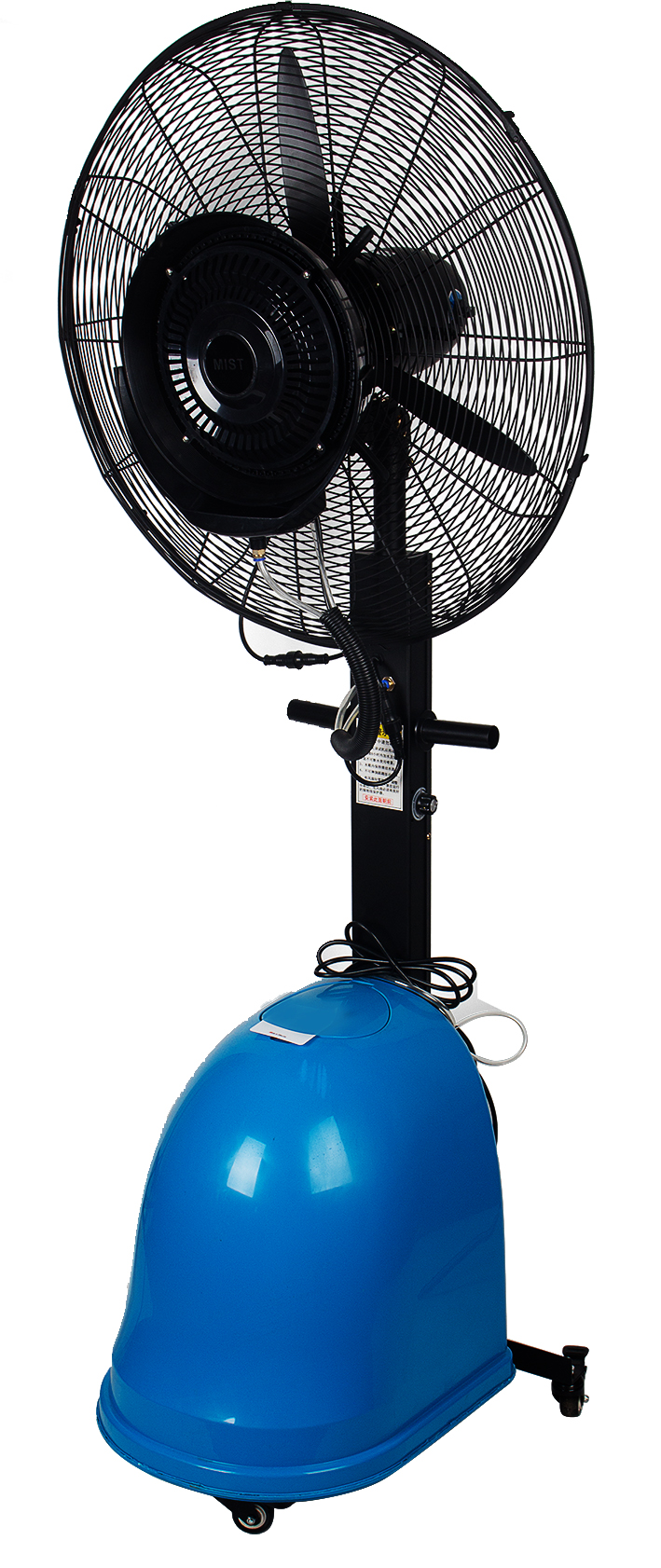
Heat drains output long before anyone mentions safety. A 32-degree workshop floor slows pick rates, invites mistakes and pushes experienced workers toward cooler jobs. For B2B buyers comparing suppliers, an industrial cooling fan is less a comfort purchase than a throughput decision, and model B232 was developed for exactly that role: continuous air movement in spaces where air conditioning makes no economic sense.
Why Factory Heat Hurts Output
What Moving Air Does to the Human Body
Human cooling depends on sweat evaporating, and airflow drives that process. Moving air strips the saturated boundary layer from skin, so a worker standing in a one to two meter-per-second stream feels several degrees cooler even though the thermometer never changes. OSHA guidance on heat-exposed work emphasizes exactly this kind of engineering control before administrative fixes. B232 was tuned to push a wide, gentle column of air rather than a narrow jet, since high velocity overhead dries eyes and stirs dust, which no industrial cooling fan should do.
Sizing by Air Changes Per Hour and Coverage Area
Sizing starts with the target, not the room. General ventilation aims for several air changes per hour, while spot cooling puts airspeed onto specific workstations. Divide floor area by the coverage footprint each unit serves, then check that combined CFM from every industrial cooling fan reaches the ventilation target. Oscillation widens the effective footprint on crowded floors, and mounting height determines how far the throw reaches before friction slows the stream. Guesswork here shows up later as hot corners workers simply avoid.
How B232 Handles Continuous Duty
Motor Protection, Bearings and the Duty Cycle
Workshop fans run ten-hour shifts, so the motor matters more than styling. B232 uses a totally enclosed motor with thermal overload protection and sealed ball bearings, a combination that tolerates dust and stops windings from cooking when airflow is blocked. The duty cycle rating reflects those choices: continuous operation without cooldown gaps. Anything less invites stator failures during the hottest week of the year, precisely when an industrial cooling fan cannot afford to stop.
Blade Geometry and Honest Performance Data
Blade pitch sets the trade-off between volume and static pressure. Steeper pitch moves more air but loads the motor, so B232's balanced pitch delivers strong CFM through open guards without overheating. Buyers should ask for performance measured to AMCA or ANSI test methods rather than marketing airflow, because inflated free-air numbers collapse once guards, grilles and real mounting conditions appear. Transparent curves are the fastest way to compare quotes from different factories.
Field Results and Buyer Due Diligence
A Warehouse Case in Malaysia
A warehouse operator in Malaysia ran a cross-dock facility where afternoon dock temperatures climbed past 38 degrees and pallet handlers rotated out every twenty minutes during heat season. Mist cooling was impractical near cartons, and air conditioning across open bays was unaffordable. The operator installed B232 industrial cooling fan units on columns at four-meter height, angled to sweep both dock faces with oscillation. Within the first month, supervisors reported the floor felt several degrees cooler in the swept zones, break frequency fell, and pick accuracy complaints declined noticeably through the hottest quarter.
Installation, Safety and Maintenance Advice
Mount each industrial cooling fan high enough that guards stay beyond reach, anchor frames to structure rather than sheet metal, and keep cables away from forklift paths. Monthly, wipe blades and guards down; quarterly, listen for bearing noise and check fastener torque, since vibration loosens hardware over time. Confirm guard mesh complies with local machine-safety rules before installation, and document the maintenance schedule so facility teams actually follow it.
An industrial cooling fan solves heat the economical way: move enough air, protect the motor, and publish honest performance data. B232 was designed around that formula, and field installations keep confirming it. Buyers who match coverage to floor plan, verify test methods and enforce simple maintenance routines get years of quiet service from each unit.
Frequently Asked Questions
What size fan suits a 500 square meter workshop?
Start from purpose rather than floor area alone. General relief ventilation usually targets four to six air changes per hour, so calculate room volume, convert that to required CFM, then divide by the realistic output of each unit at its mounting height. A 500 square meter hall with five-meter ceilings commonly needs several large circulators placed to overlap their throw patterns.
Why choose air movement instead of air conditioning?
Conditioning a high-bay building with open doors costs far more than moving air, and cooled supply air escapes anyway. Air movement attacks heat stress directly by accelerating sweat evaporation, targets specific workstations through directional placement, and consumes a fraction of the energy. Most facilities combine a few spot conditioners for control rooms with broad circulators across the floor.
How high should circulators be mounted?
Mounting height balances safety against throw distance. Guards must sit beyond normal reach, yet the air column needs room to develop before it meets people, so four to six meters works for most docks and assembly floors. Below that height, restrict oscillation angle and verify guard mesh against local machine-safety rules. Above it, expect the stream to lose speed before reaching the floor.
Can B232 run through long summer shifts without stopping?
Continuous duty is the design target. The totally enclosed motor, thermal overload protection and sealed bearings allow non-stop operation through long shifts, and the overload device cuts power if airflow is ever blocked rather than letting windings overheat. Facilities should still power units down for monthly cleaning, because dust on blades slowly steals airflow and shifts balance even when everything sounds normal.
Which maintenance tasks keep airflow strong?
Keep blades and guards dust-free, because buildup changes pitch and steals CFM. Listen monthly for bearing noise, check fastener torque quarterly, and inspect power cords along forklift routes. Treat every industrial cooling fan as equipment on a schedule, not furniture: documented cleaning and inspection routines catch imbalance early, before vibration wears bearings and noise spreads across the floor.