
 EN



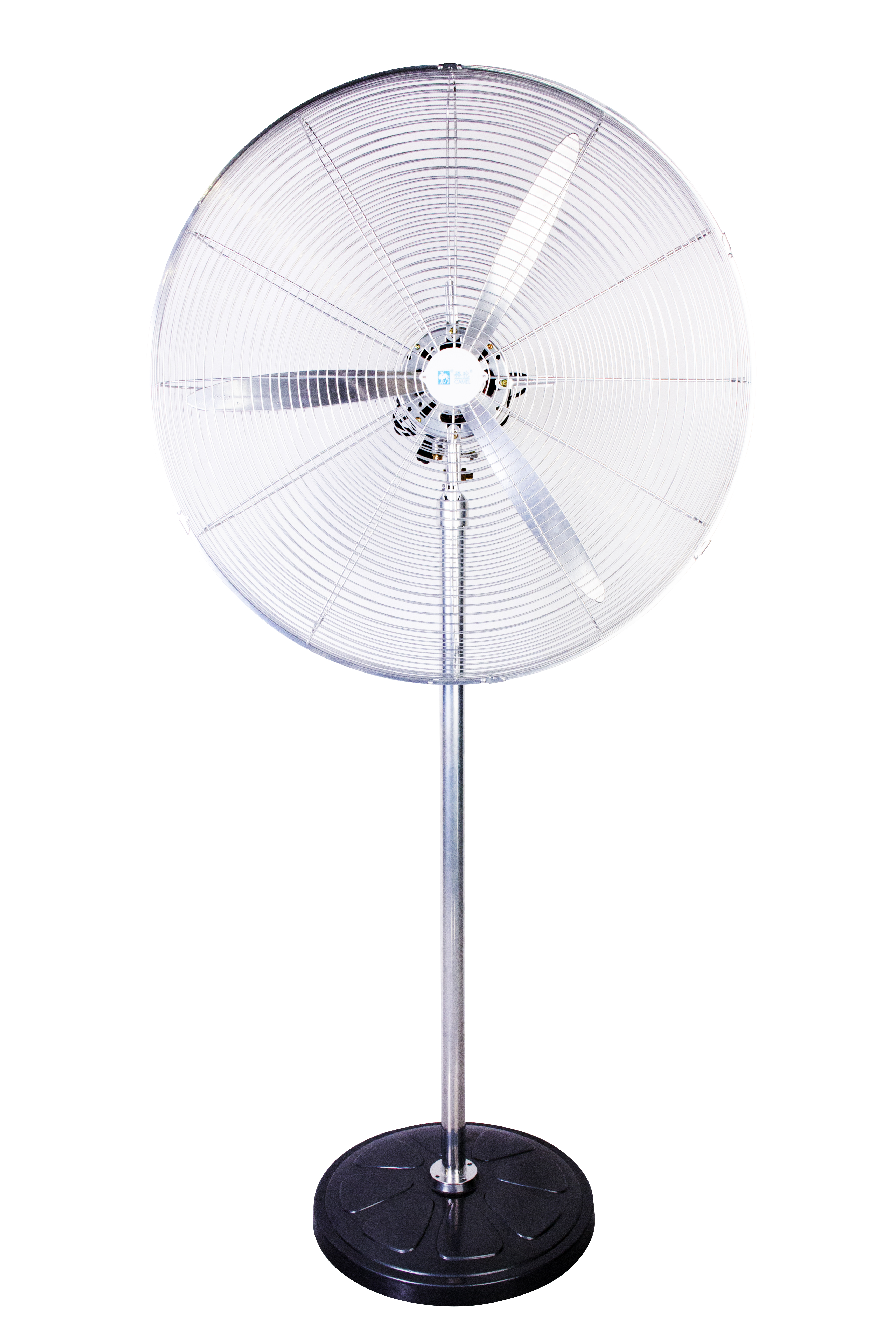
Dining patios, gym floors and hotel ballrooms share one cooling problem: fixed wall units push air along a single lane and leave half the room uncomfortable. The B147 commercial standing fan from Kanasi solves it. As a floor-standing pedestal unit, it moves with the venue layout rather than a fixed wall mount. Adjustable height, wide oscillation and five-speed remote control let managers redirect airflow as tables or displays shift. Produced in Kanasi's 80,000 m² Shunde plant, it carries the 98% quality pass rate behind exports to Europe, the US and the Middle East.
Why a Commercial Standing Fan Outperforms Fixed Units
Where a Commercial Standing Fan Beats a Fixed Unit
Fixed wall or ceiling units serve one lane of air. When a restaurant adds tables or a gym rearranges equipment, a commercial standing fan can simply be repositioned, so cooling follows the floor plan. For event halls that change configuration weekly, that mobility alone justifies it.
Oscillation Coverage, Adjustable Height and Remote Control
An oscillating head sweeps roughly 90 degrees, spreading airflow coverage over several zones instead of one lane. A fixed unit creates a strong jet plus a dead zone, so some guests feel a draft while others feel nothing. Height adjustment matters too: a low setting clears a gym's weight benches, a high setting throws air over a packed crowd. Telescopic stand, five-speed control and remote let staff tune output without ladders, and a timer cuts overnight energy waste.commercial standing fan, pedestal fan wholesale, oscillating airflow coverage, B147 pedestal fan, hospitality cooling equipment
Safety and Motor Duty in Public Spaces
Base Stability and Tipping Hazards
Public spaces are hard on equipment: trolleys, children and cleaning crews all make contact with a floor unit. A weighted cast base with a low center of gravity and a protected power cord reduces the tipping hazard and trip risk. Feedback from a UK restaurant chain patio program supplied by Kanasi Fans ranked floor stability as a decisive purchase factor.commercial standing fan, pedestal fan wholesale, oscillating airflow coverage, B147 pedestal fan, hospitality cooling equipment
Commercial Duty Versus Household Motors
Household motors are built for intermittent evening use; running one twelve hours a day overheats the windings and shortens life. A commercial standing fan uses copper windings, sealed bearings and thermal protection rated for continuous duty across long opening hours. Duty mismatch is a leading cause of failed installations, so match the motor class to daily operating time.
Noise: Why Blade and Grill Geometry Matter
Most noise complaints trace back to blade pitch and grill mesh. Uneven blade pitch creates turbulence guests hear as a whine, while wide-open grills let blades sing at top speed. Balanced blades with a fine grill pattern hold the noise level low enough for table conversation and hotel lobbies alike. Full specifications for the B147 are listed on the Kanasi website.
Standards, Selection and Care
Standards That Signal Safe Air Performance
Third-party standards remove guesswork. ANSI/UL 507 addresses fan safety, covering enclosures, grounding and motor temperature limits. ANSI/AMCA 210 and ISO 5801 define how airflow and pressure are measured, so a quoted CFM figure means the same thing from every supplier. Ask each vendor which certifications the model holds and request test data behind any airflow claim.
A Buyer Checklist for Hotels and Contractors
Walk the site before ordering: measure floor area, note socket locations and check ceiling clearance at maximum height. Confirm the motor rating matches daily operating hours, compare base weight against foot traffic, and ask for UL 507 documentation. For any commercial standing fan purchase, sample one unit, run all five speeds during peak service, then scale the order.
Placement and Maintenance Schedule
Position each unit so the sweep crosses seating rather than walkways, and keep clearance around the grill so intake air stays unrestricted. Wipe blades and mesh monthly, check base bolts and cords quarterly, and inspect the oscillation mechanism twice a year. This routine preserves airflow, keeps noise down and extends service life.
Commercial Standing Fan: Frequently Asked Questions
What makes the B147 suitable for restaurants and retail floors?
The B147 commercial standing fan combines a weighted base for busy floors, oscillation that covers several tables at once, and height adjustment that clears displays or seating. Kanasi builds it on production lines backed by a documented 98% quality pass rate, and the factory ships to Europe, the US and the Middle East, so supply and spare parts stay consistent across multi-site rollouts.
How does oscillation coverage compare with fixed airflow?
A fixed unit pushes one strong jet into one lane, leaving dead zones on either side. Oscillation sweeps the same airflow across a wide arc, so more seats share moderate air movement instead of a few guests receiving blasts. Managers typically report fewer complaints about uneven cooling and gain freedom to rearrange furniture without chasing airflow patterns.
Can a standing fan operate safely in gyms and event halls?
Yes, when the design addresses public-space risks. A low, weighted base resists knocks from equipment and foot traffic, a protected cord limits trip hazards, and thermal motor protection prevents overheating during long sessions. Buyers should still position units away from walkways and confirm the model meets applicable safety standards for commercial electrical appliances before installation.
Which standards should a buyer verify before ordering?
Start with ANSI/UL 507 for fan safety, then check whether airflow figures follow ANSI/AMCA 210 or ISO 5801 test methods, which make quoted performance comparable between suppliers. For comfort planning, ASHRAE guidance on air movement helps translate airflow numbers into realistic seat coverage. Request certificates and test reports rather than relying on brochure claims alone.
How often should a commercial pedestal unit be serviced?
Light maintenance keeps output stable: wipe blades and the grill monthly, check base bolts and the power cord quarterly, and inspect the oscillation mechanism twice a year. Venues running twelve or more hours daily benefit from an annual bearing and motor check by a technician. A pedestal fan treated this way typically serves busy floors for many seasons.