
 EN



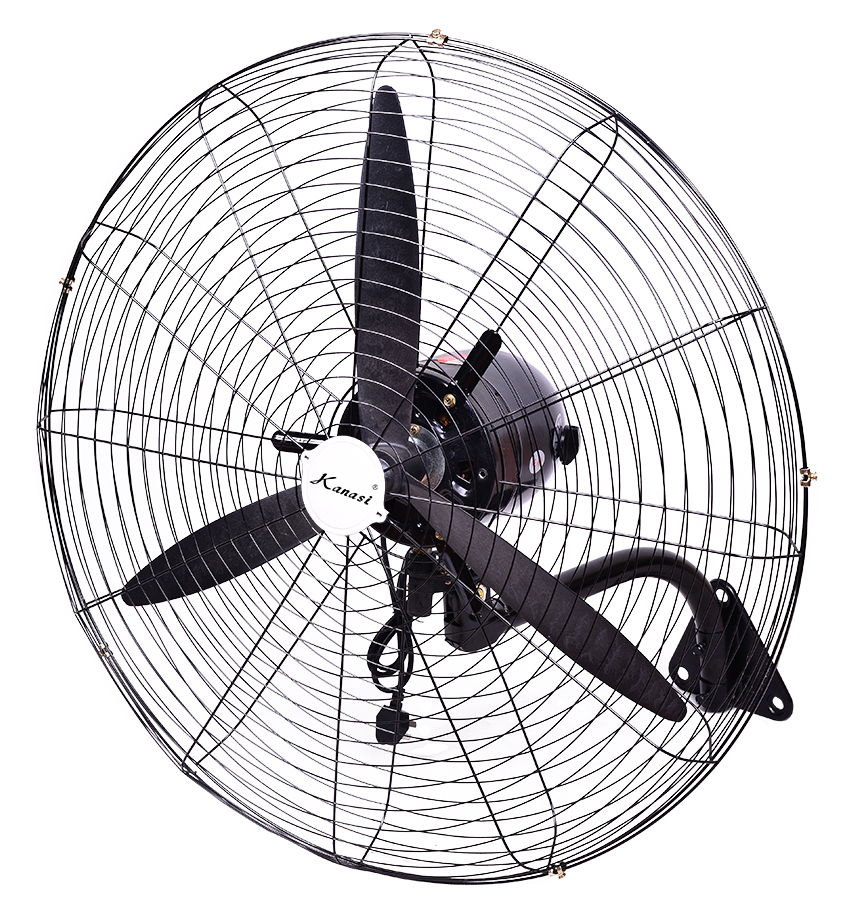
When a production hall runs out of floor, ventilation hardware is blamed first and relocated last. A wall mounted extractor fan industrial unit such as the B233, built for heat removal and welding fume extraction, resolves that conflict by lifting extraction off the ground: the fan sits in the wall, pulling hot air and fumes out instead of competing with machines and traffic. Kanasi Electrical, founded in 2007 in Shunde, Foshan, manufactures this category for factories across Europe, the Middle East and Africa.
Real Project: How a Gulf Fabrication Plant Freed Its Floor
Why a Wall Mounted Extractor Fan Industrial Suits a Crowded Hall
A metal fabrication plant in the Gulf region runs welding bays, plasma cutting tables and grinding stations under one roof. Years of expansion filled every open meter, and inherited floor-standing extractors blocked forklift lanes while stirring dirty air instead of removing it. Operators worked in visible haze by mid-morning, with heat layered beneath the roof sheets. The root cause was placement: extraction hardware sitting inside the work zone, not in the building envelope.
The B233 Retrofit and Its Outcome
Kanasi supplied a documented retrofit with B233 units, one per bay, bracket-mounted high on the sidewalls above the torch stations. Discharge passes straight through the wall, so no ductwork crossed the ceiling and no floor was lost. Once the wall mounted extractor fan industrial installation was commissioned, haze at working height cleared fast, and recovered lanes let pallet traffic move without detours — an outcome rooted in factory discipline and the 98% quality pass rate across the supervision system.
Air Performance: Static Pressure, Shutters and Placement
Free-Air CFM Versus Static Pressure in a Real Wall
Catalog airflow figures are free-air values, with no resistance at the outlet. A real wall adds static pressure through shutters, grilles, sleeves and rain hoods. Standards such as ANSI/AMCA 210 and ISO 5801 exist so buyers can compare wall mounted extractor fan industrial curves instead of single numbers. A unit delivering strong flow at zero pressure loses much of it once a louver and weather cowl are fitted — the rating at expected resistance matters.
Shutter Design, Mounting Height and Throw Direction
A backdraft louver opens under fan pressure and falls shut when the motor stops, sealing the hall against weather. Mounting height decides capture quality: too low drags breathing-zone air sideways; too high skims the layer beneath the roof; the useful band sits above head height, angled at the hottest sources. Throw direction matters just as much — workplace ventilation rules under OSHA 29 CFR 1910 expect contaminants kept below harmful levels, so a wall mounted extractor fan industrial must sweep the plume instead of short-circuiting between intake and discharge.
Selecting a Wall Mounted Extractor Fan Industrial for the Plant
Corrosion-Resistant Finishes for Humid and Coastal Sites
Humidity, salt air and washdown cycles corrode cheap sheet metal fast. For coastal sites and food processing halls, specify a corrosion-resistant finish — polyester powder coat over pre-galvanized steel, or epoxy for harsher exposure — with stainless fasteners and a sealed motor. Fan construction and guarding should follow ANSI/UL 507, covering enclosure and electrical safety. A wall mounted extractor fan industrial ordered with the correct finish keeps its airflow rating long after a budget unit seizes.
Buyer Checklist: Wall Mounted Extractor Fan Industrial Inspection and Electrical Notes
Before signing off delivery, run through a checklist. Inspect blade balance and guard spacing against finger-probe requirements. Cycle the shutter by hand and confirm it seats fully closed. Match voltage and frequency to the site supply — 380–415 V at 50 Hz in much of the Middle East and Africa, 220–240 V in Europe. Fit vibration isolators on installation; export B233 units ship with bracket hardware and a cable gland. Seasonal maintenance stays simple: clear hinges, wipe blades, re-check torque. The frequently asked questions below cover sizing, height, shutters and finishes.
Frequently Asked Questions
What size of hall can one unit ventilate?
As a rule of thumb, match the wall mounted extractor fan industrial rating to hall volume and target air changes per hour. Divide room volume by the desired air change rate, then choose the nearest rated airflow with static pressure margin for shutters and grilles. One unit serves a single bay or workshop cell; larger halls do better with several smaller units spaced along opposing walls.
How high should a wall extractor be mounted?
Mount above head height and above the contamination layer — three to five meters in a fabrication or processing hall. The target is the rising plume above hot equipment, not the breathing zone. Keep the discharge path clear of people and make sure replacement air has an entry point, otherwise extraction collapses however strong the unit is.
Do the shutters close automatically when the fan stops?
Standard backdraft shutters are gravity operated: airflow pushes the blades open, and they fall closed once the motor stops, sealing the opening against rain, dust and pests. Wind-driven versions stay shut against crosswinds. Motorized actuation ties into an interlock, so the louver opens only while the extraction circuit runs and the hall stays sealed during downtime.
Which finish suits a coastal or washdown environment?
Polyester powder coat over pre-galvanized steel handles humid inland sites, while epoxy coatings and stainless fasteners suit coastal salt air or regular washdown in food plants. Sealed motors and closed bearing housings matter as much as the paint, because moisture that reaches the windings ends service life early, long before the coating fails.
Can one unit handle both process heat and welding fume?
A wall unit handles general dilution well: it removes heated air and light background fume, cutting concentrations across the hall. Dense plumes directly above a torch or cutting table still need source capture, because a wall-mounted unit sits too far from the emission point to intercept heavy fume. Practical layouts combine both: capture at the torch, dilution through the walls.