
 EN



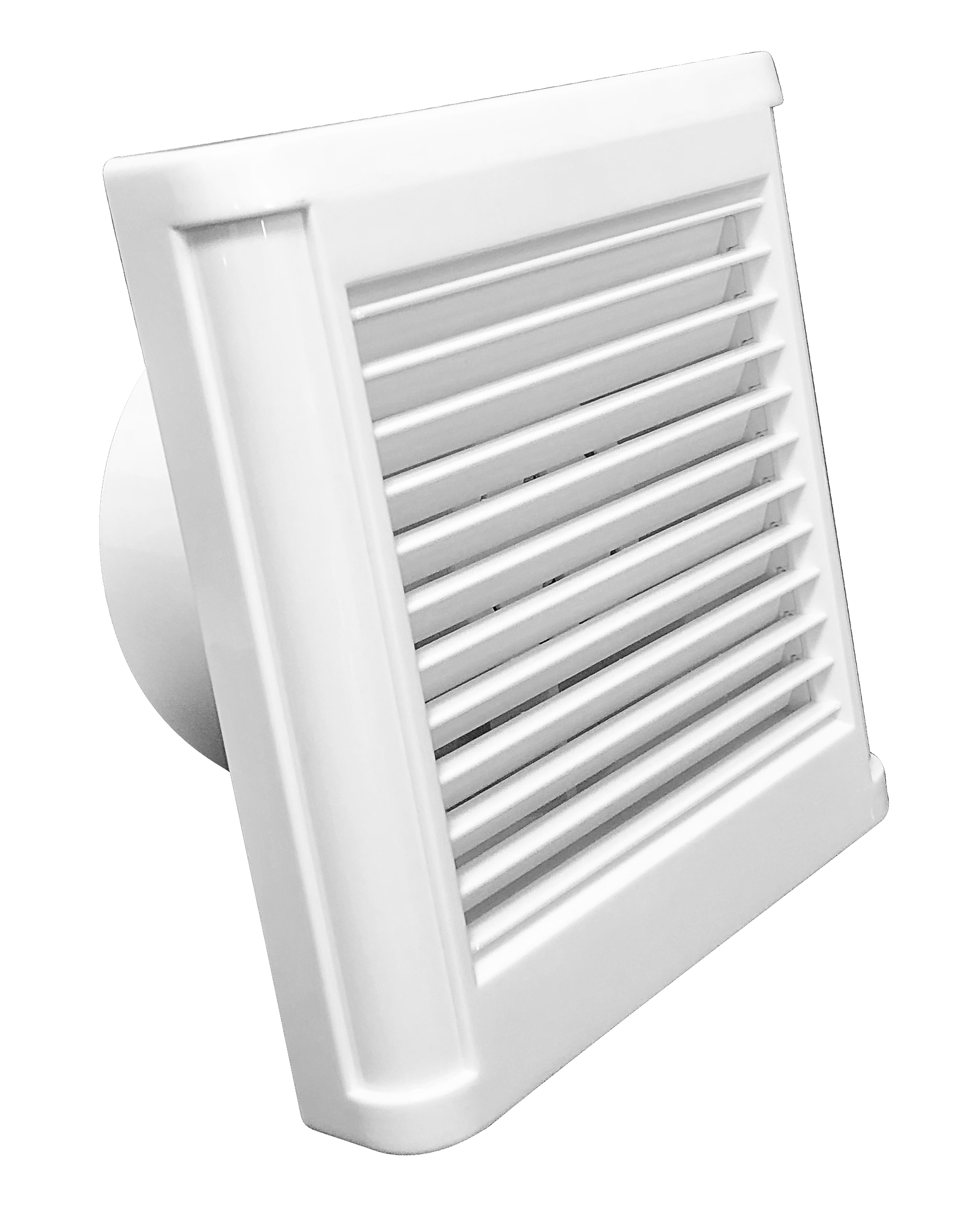
Walk into a busy hotel floor and the washrooms tell their own story: humid air, lingering odors, mirrors that fog within minutes. Commercial bathroom exhaust fans exist to fix exactly that, and the B087 was engineered for multi-point buildings where dozens of units run side by side for years. Design priorities centered on motor endurance, stable output against duct resistance, low sound, and housings built for humid, chemical-laden air.
Engineering for Daily Performance
Motor and Impeller Durability
The motor decides whether a fan lasts three years or eight. Commercial bathroom exhaust fans in hotels often run ten to twelve hours daily, so the B087 uses a totally enclosed motor with class F insulation, permanently lubricated bearings, and thermal overload protection that cuts power before heat degrades the windings. Its backward-curved impeller is dynamically balanced at the factory, because slight imbalance creates vibration that travels down the duct run to the grille as a hum.
Static Pressure and Duct Run Design
A free-air rating means little once ductwork is attached. Every elbow, transition, and metre of duct adds static pressure, and extraction drops accordingly. On floors where one header duct serves six bathrooms, the grille nearest the fan pulls a disproportionate share unless branch dampers balance the system. Choosing commercial bathroom exhaust fans whose curve stays flat between 0.2 and 0.5 inches of static pressure keeps output predictable, while larger diameter ducting lowers velocity and cuts resistance sharply on long runs.
Sizing Multi-Point Installations
Airflow Targets and Air Changes
Ventilation standards give specifiers a starting point. ASHRAE 62.1 points toward roughly 50 CFM of exhaust per water closet, or 0.7 CFM per square foot where layouts differ, and facilities teams usually round upward because shower steam and long ducts erode theoretical values. Sizing commercial bathroom exhaust fans this way, then converting airflow into air changes per hour, makes proposals comparable; a washroom refreshed eight to ten times hourly stays dry enough that grout and door hardware last longer.
Lessons from a Hotel Retrofit
A regional hotel group shows the stakes. The facilities director of a fourteen-storey property was fielding complaints about humid corridors while maintenance replaced failed units several times a year. The team installed B087 commercial bathroom exhaust fans across 180 bathrooms and rebalanced each riser so no single grille dominated. Within two weeks corridor humidity settled near 55 percent, fogged mirrors stopped drawing complaints, and the maintenance list shrank. Quieter operation mattered equally, since light-sleeping guests stopped hearing units cycle.
Buying and Maintaining with Confidence
A Practical Pre-Shipment Checklist
Before commercial bathroom exhaust fans leave the line, inspectors should confirm motor markings, run each unit briefly to listen for bearing noise, and check that the backdraft damper closes fully under its own weight. Verifying brackets, terminal boxes, and gaskets takes minutes yet prevents the most common export complaints. Sampling units from the same bulk batch, plus photos of packaging and pallet stacking, helps receiving teams plan humid-climate storage.
Installation and Long-Term Care
On site, flexible connectors between the fan collar and rigid duct reduce vibration transfer, and access panels placed within reach make cleaning realistic. Grilles and blades collect lint that gradually narrows the effective opening, so a quarterly wipe-down preserves airflow at minimal cost. Switch-activated commercial bathroom exhaust fans pair neatly with timer controls, letting each room run a fixed period after occupancy, while storeroom spares of impellers and damper springs turn two-hour repairs into twenty-minute swaps.
Matching commercial bathroom exhaust fans to a building comes down to aligning motor class with duty hours, fan curve with duct resistance, and sound rating with occupant comfort. The B087 reflects feedback from contractors installing units at scale, and the line supports custom voltage, speed taps, and export packaging for distributors worldwide. Buyers who weigh these details early spend far less on callbacks later.
Frequently Asked Questions
What airflow should a hotel bathroom target?
Most specifiers plan around 50 CFM per water closet, following ASHRAE 62.1 guidance, then adjust upward for shower steam or long duct runs. A compact guest bathroom usually performs well at that level, while larger accessible bathrooms with multiple fixtures benefit from 80 to 100 CFM. Checking the fan curve at the expected static pressure matters far more than the free-air number printed on the carton.
Why does static pressure reduce airflow?
Duct resistance grows quickly with every elbow, reducer, and length of run, and a fan delivers less air as resistance rises. A unit moving 100 CFM in open air might fall to 70 CFM through a long riser. That gap explains why commercial bathroom exhaust fans should be selected for their curve across the working pressure range, not the free-air figure, keeping every bathroom protected on upper floors.
How often should grilles be cleaned?
Quarterly cleaning suits most commercial washrooms. Dust and lint settle on blades and grilles, narrowing the effective opening and trimming airflow well before anyone notices. A wipe with a damp cloth restores performance in minutes. In high-humidity coastal buildings, a twice-yearly impeller removal lets maintenance staff check bearing play and confirm the damper spring still closes the shutter fully.
Can one fan serve several bathrooms?
Yes, and multi-point headers are common in hotels and clinics, though balancing becomes essential. Without branch dampers, the bathroom closest to the fan captures most of the airflow while distant rooms stay humid. Branch dampers, matched grille sizes, and a fan curve that tolerates 0.2 to 0.5 inches of static pressure let one unit serve four to six rooms dependably.
Do export units resist humid electrical faults?
The B087 pairs a sealed motor housing with thermal overload protection, so condensation and cleaning vapors stay away from windings while excess heat cuts power before insulation degrades. Terminal boxes are gasketed, and coastal orders can specify enhanced coatings on housings and fasteners. Buyers shipping to tropical markets often request this configuration plus factory run-testing records for every carton