
 EN



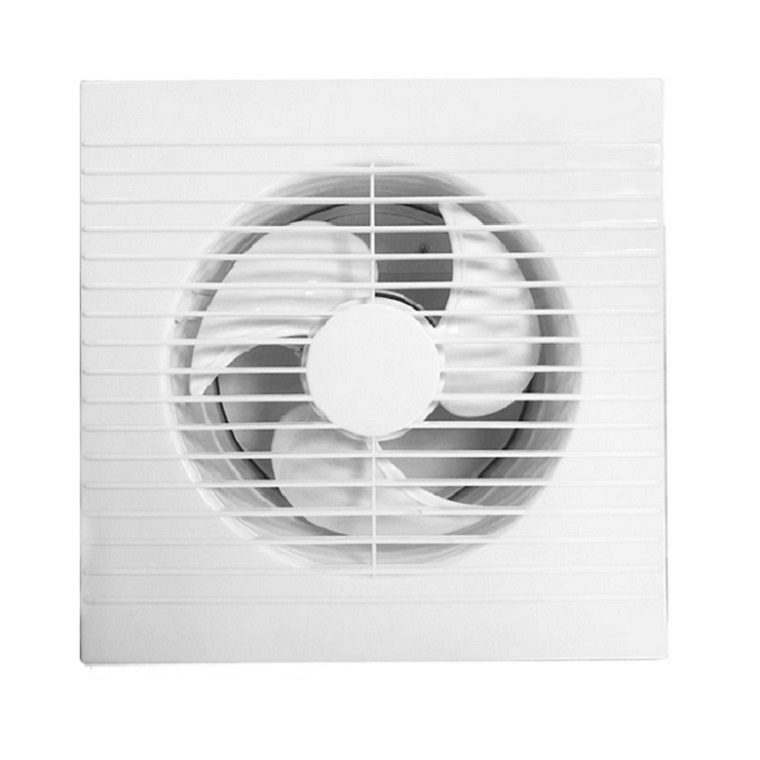
Small rooms create some of the toughest ventilation jobs in a plant. A 10 inch exhaust fan such as the B132 exists for exactly those spaces: storage rooms that trap heat, windowless bathrooms, warm server closets, and compact workshop cells where a large axial fan will not fit. Kanasi Fans, founded in 2007 in Shunde, Foshan, applies the same production discipline to small-diameter units as to its industrial ranges, backed by a documented 98% quality pass rate. A recent European project shows how those decisions come together.
A European Workshop Case: A Finishing Cell in Poznan
Why a 10 inch exhaust fan suited this space
A furniture manufacturer in Poznan, Poland, runs a lacquer-finishing cell of about 45 square metres. Solvent-based lacquers fill the air during each batch, the room has no window, and its only opening is a roller door. Wall space is tight, so large-diameter equipment was never realistic; the wall sleeve accepted a compact 10 inch exhaust fan and nothing wider.
The problem: fumes, heat and dust rework
Odour lingered for hours after each coat, and summer afternoons made it uncomfortably warm. Staff propped the roller door open, which pulled dust across wet lacquer and created rework. Whenever airflow stagnated, finishing quality dipped and the cell fell behind schedule.
The solution and the documented result
Kanasi supplied B132 units for wall-through mounting at 2.5 metres, placed opposite the door to sweep fresh air across the benches. The 10 inch exhaust fan runs through every shift, and a gravity shutter closes the aperture overnight. Lacquer smell clears within minutes of the final coat, the door stays shut, dust rework dropped visibly, and the cell keeps pace during heat spells.
Risk Analysis: Where Small Exhaust Projects Go Wrong
Undersizing, oversizing and the cost of guessing
Sizing errors carry costs. An undersized unit never reaches the target air changes per hour, so vapour lingers. An oversized fan in a small room blasts drafts, drags dust through every gap and pushes people away. Ducted runs add static pressure that cuts delivered flow below the free-air figure. Guessing when selecting a 10 inch exhaust fan wastes budget and reopens the project.
Inside the B132: blade pitch, motor and housing
An axial fan moves air parallel to the shaft: pitched blades scoop air and push it in a straight line, ideal for short paths through a wall. The B132 pairs an external rotor motor with thermal protection, sealed bearings rated for continuous duty, and a balanced blade set behind a steel guard. Small frames run hot, so thermal cutoffs matter.
Why small fans spin faster and sound louder
A small-diameter wheel moves less air per revolution than a large one, so a 10 inch exhaust fan must spin at higher RPM to deliver similar volume. Higher speed raises the blade-pass frequency and amplifies motor hum. Performance measured under ANSI/AMCA 210 and ISO 5801 keeps comparisons honest, while resilient brackets and a mounting height above head level soften perceived noise.
Standards, Sizing and a Buyer Checklist
Standards that matter before ordering
OSHA 29 CFR 1910 requires workplaces to control airborne contaminants through adequate mechanical ventilation. ANSI/UL 507 governs fan safety construction, covering motors, guards and wiring, so request conformity evidence. Airflow ratings measured to AMCA 210 or ISO 5801 are comparable; unrated numbers are marketing. When comparing any 10 inch exhaust fan, ask for the standard behind each rating; Kanasi treats these documents as design inputs from its independent R&D centre.
A buyer checklist for the 10 inch exhaust fan
Before ordering, measure room volume and calculate the CFM needed for eight to twelve air changes per hour. Confirm sleeve dimensions and choose wall-through mounting for straight paths or ducting for routed runs. Specify a thermally protected, continuous-duty motor, and set the mounting height about 2.3 to 2.6 metres above benches. Inspect blades, guard and shutter, test direction and noise, and schedule quarterly cleaning. The frequently asked questions below close this guide.
Frequently Asked Questions
What size room can a 10 inch exhaust fan handle?
Work from eight to twelve air changes per hour: multiply room volume by the target rate, divide by sixty, and the result gives the CFM required. A 10 inch exhaust fan suits enclosed spaces up to about 25 cubic metres, depending on heat load and door traffic. Verify against the published airflow curve.
How much airflow does a compact unit deliver?
Delivered flow depends on whether the unit exhausts freely or pushes through ducting, because static pressure reduces output. Kanasi publishes data measured under ANSI/AMCA 210 and ISO 5801 methods, so numbers describe repeatable conditions. Request the airflow curve, match it against the calculated CFM, and add margin for shutters and dust.
Can the fan be ducted instead of mounted through a wall?
Yes, within limits. Short, straight duct runs keep losses small, while every bend and metre of flexible duct adds resistance that lowers delivered airflow. For routed installations, select a higher duty point, seal every joint, and keep total runs under three metres. Wall-through mounting remains simpler, quieter and more efficient.
Which motor type suits continuous workshop operation?
An external rotor, capacitor-run motor with built-in thermal protection handles long duty cycles in warm rooms better than a shaded-pole design. Sealed bearings keep noise stable over thousands of hours, and thermal cutoffs protect against stalling when dust blocks the guard. Confirm the duty rating and ANSI/UL 507 conformity before ordering.
How often should a small exhaust fan be maintained?
Quarterly attention suits most rooms: brush dust off blades, vacuum the guard, wipe the shutter and listen for bearing roughness while the wheel spins. Workshops with lacquer or wood dust need monthly cleaning, since sticky films unbalance the wheel and cut flow. Check mounting screws twice a year and replace the unit if vibration changes.