
 EN



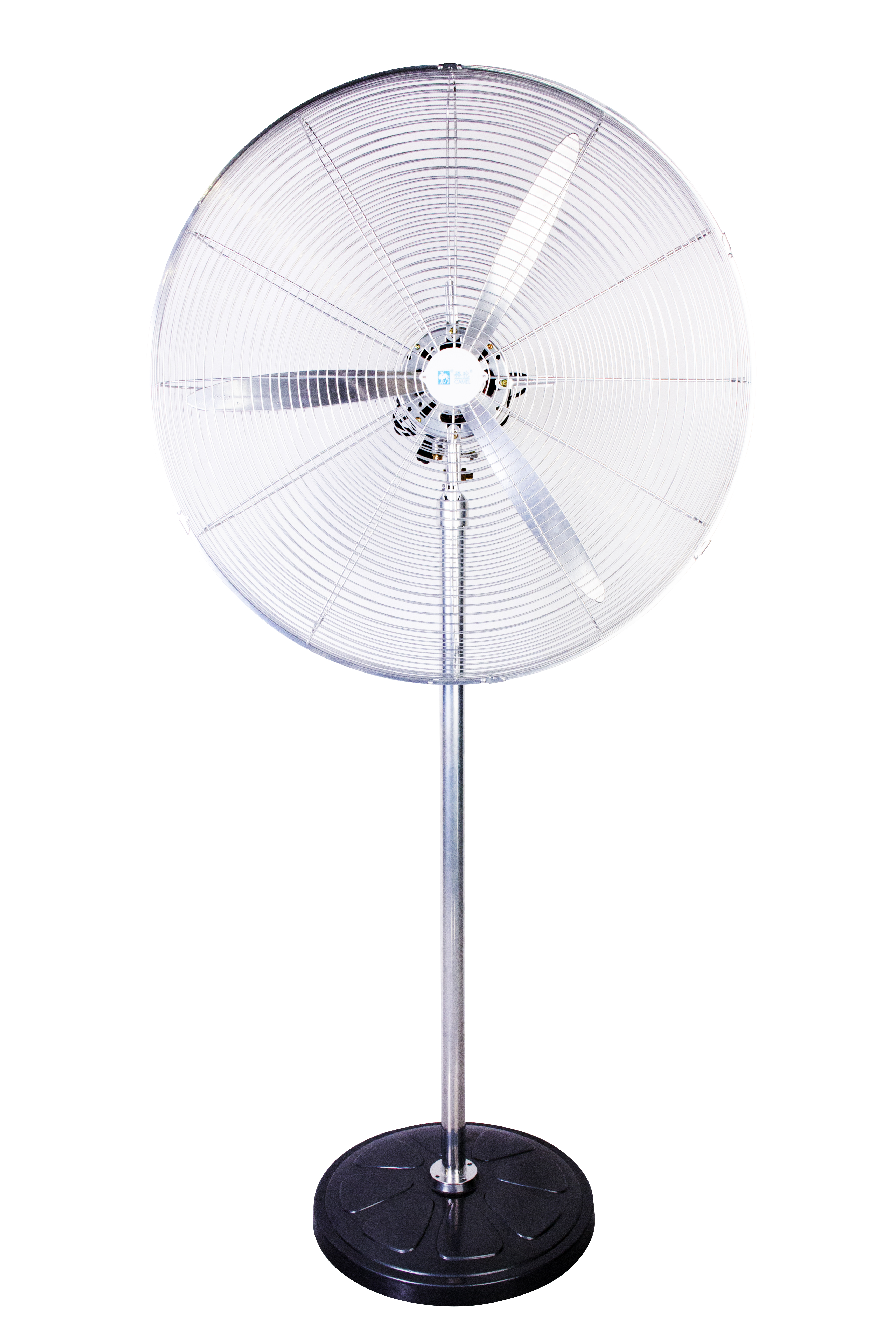
Blade material sounds like a minor spec until the first summer of warped plastic blades and wobbly bearings. Buyers comparing circulators for demanding floors should read an industrial fan metal blade listing differently: material, coating and balancing decide whether a unit survives heat, dust and corrosive air. Model B351 was engineered around those three failure points for fabrication shops, foundries and coastal plants.
Why Blade Material Decides Lifespan
Metal Versus Plastic Under Real Loads
Plastic blades cost less and stay quiet, yet hot workshops push them past their limits: sustained heat softens pitch, oil mist embrittles the polymer, and a struck blade cracks instead of denting. Steel blades keep their angle, shrug off knocks and tolerate temperatures near heat sources. Aluminum splits the difference with lighter weight and natural corrosion resistance. Choosing an industrial fan metal blade construction makes sense wherever heat, impact or aggressive air would age plastic prematurely.
Corrosion Threats and Protective Coatings
Corrosion is the quiet killer for any industrial fan metal blade in coastal plants, plating shops and humid warehouses. ISO 12944 classifies environments from C1 through C5 by corrosivity, and coating choice should follow that classification rather than habit: a galvanized or powder-coated steel blade suits C3 conditions, while C4 and C5 locations demand heavier systems or stainless construction. Inspect coatings during every maintenance visit, because a scratch through the layer becomes the first rust point.
Balance, Noise and Safe Operation
What Dynamic Balancing Actually Does
An unbalanced blade wheel vibrates, and vibration destroys bearings, loosens fasteners and turns mounting frames into soundboards. ISO 21940 sets the balance quality grades rotating equipment should meet, and fan wheels are no exception: B351's steel wheel is dynamically balanced before assembly, so residual vibration stays low across the speed range. Buyers should treat balancing data as a quality signal; suppliers who publish it usually control their production process, not just their marketing.
Blade Pitch, Airflow and Guarding
Pitch angle trades airflow against motor load: steeper blades move more CFM but draw more current, so geometry must match the motor rating. B351's pitch was selected to deliver strong throw through open work areas without overheating at continuous duty. Guarding completes the safety picture for an industrial fan metal blade; steel guards with tight mesh keep hands and debris away from spinning blades, and guard spacing should comply with the machine-safety rules that apply at each installation site.
Field Lessons and Buyer Due Diligence
A Fabrication Workshop Case in Vietnam
A metal fabrication workshop in Vietnam ran plastic-blade circulators beside welding bays, and each summer brought the same complaints: blades sagged near radiant heat, airflow wandered, and replacements multiplied. The workshop switched those positions to B351 industrial fan metal blade units with steel wheels and powder-coated guards. Supervisors reported steadier air movement across the bays, noticeably fewer blade replacements, and vibration that stayed low even after dusty months. Noise remained at conversational levels, letting welders keep communicating without shouting across the floor.
Inspection and Maintenance for Long Service
Check fastener torque and blade condition monthly in dusty plants; cleaning should always end with a spin check, since uneven deposits reintroduce imbalance. Examine coatings for chips and touch them up promptly, especially near corrosive processes. Listen for bearing noise weekly, and log findings so trends become visible. A documented routine keeps an industrial fan metal blade serving reliably for years.
An industrial fan metal blade succeeds when material, coating and balancing match the environment it serves. B351 bundles those choices for buyers who cannot afford seasonal blade failures or creeping vibration. Compare candidates on construction rather than catalog airflow, ask for balance and coating details in writing, and inspect samples under load before committing to volume.
Frequently Asked Questions
Do metal blades always outperform plastic ones?
No. Plastic remains sensible in clean, cool, low-impact environments, and it costs less to replace. Metal earns its premium where heat softens polymer pitch, oil mist embrittles blades or impacts are routine. Match material to environment: a plastics workshop and a foundry need different answers, and the honest comparison weighs replacement frequency, not just the purchase order.
What does dynamic balancing involve in practice?
The wheel spins with correction weights added until residual imbalance falls within a defined grade under ISO 21940. On a finished fan, buyers notice balancing through smooth mounting frames, steady noise and bearings that survive years instead of seasons. After heavy cleaning or a blade strike, rebalancing or wheel replacement restores that smoothness, which is why inspection matters.
How does coating class affect coastal factories?
Salt-laden air pushes steel structures into higher ISO 12944 corrosivity categories, where thin paint fails within a season or two. Coastal buyers should specify marine-grade coating systems or stainless construction, inspect coatings quarterly, and treat every chip as urgent. The modest premium for proper protection repays itself the first time an uncoated competitor unit starts shedding rust flakes across stored goods.
When should blades be rebalanced or replaced?
Rebalance after any blade strike, after heavy deposit buildup survives cleaning, or whenever vibration or noise rises noticeably. Replace wheels when blades show cracks, deep dents or permanent pitch change, since straightening steel rarely restores factory balance. Keeping one spare wheel per critical area turns an unexpected stoppage into a fifteen-minute swap instead of a lost shift.
Which construction details deserve a close look?
Inspect blade material and thickness, coating system, guard mesh spacing and the balance certificate. Ask how the industrial fan metal blade attaches to the hub, because fastener design drives long-term stability. Sample one unit, run it at working speed, and place a hand on the frame: smooth hardware, consistent airflow and quiet bearings reveal build quality faster than any specification sheet.