
 EN



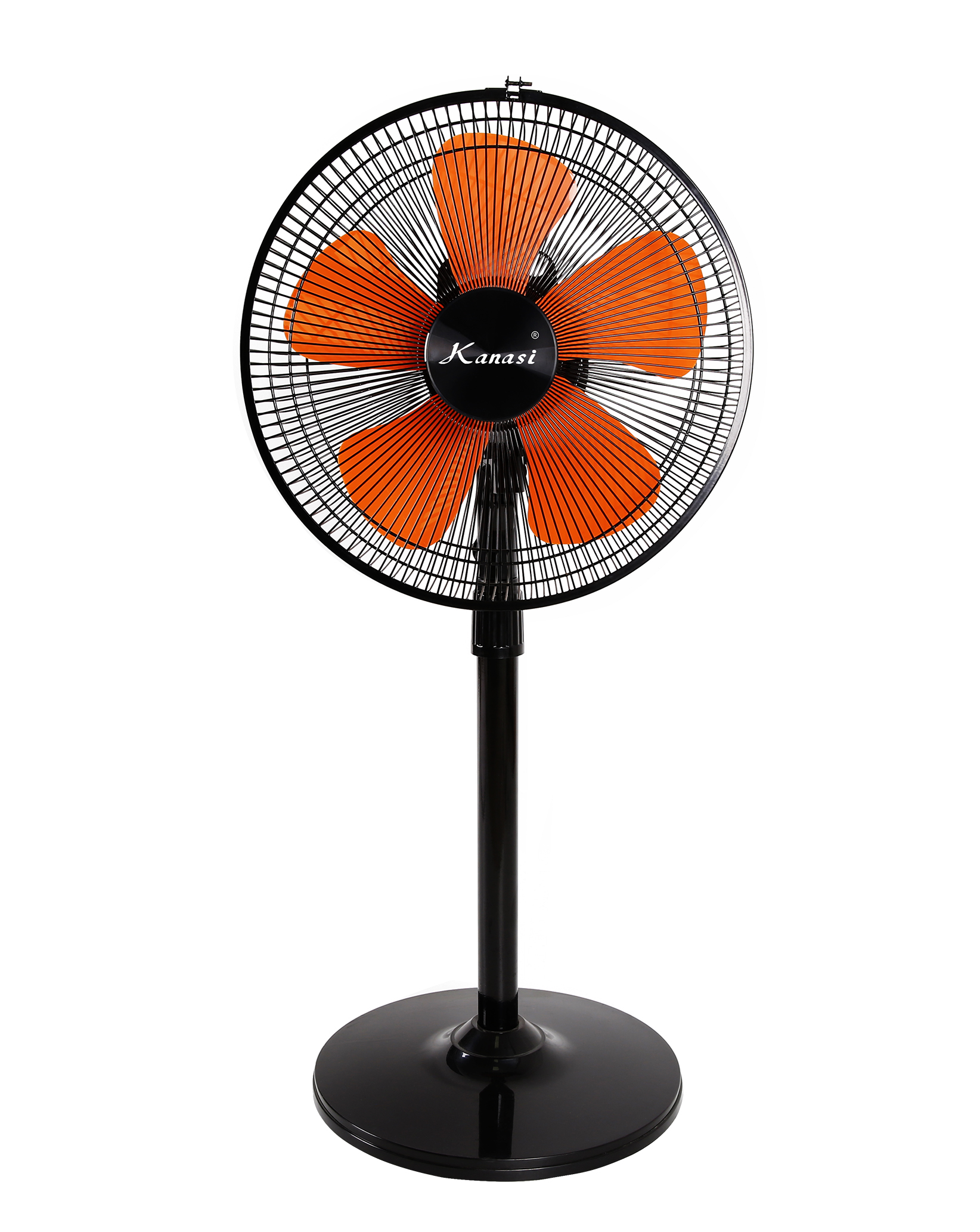
Air that pulses in gusts distracts diners, patients, and desk workers in a way steady circulation never does. A stand fan five blade design addresses that discomfort at the source: five pitched blades slice air into finer streams than a three-blade layout can. The B399 from Kanasi, a Shunde manufacturer building fans since 2007 across an 80,000 m² plant, applies this principle to commercial circulation. The sections below trace a documented project, blade-count physics, and a buyer checklist.
Why Smooth Airflow Matters in Commercial Spaces
Stand Fan Five Blade B399 in a European Clinic Chain
A clinic group across several European cities kept hearing the same complaint: three-blade pedestal fans pushed air in noticeable gusts, and patients seated in the stream felt it pulsing on their skin. Lower speeds made rooms stuffy. Kanasi supplied the B399 as a replacement, fitting each stand fan five blade head at reception desks, corridors, and benches at medium speed with wide oscillation. Occupants stopped noticing the airflow, seating-area complaints dropped, and sites ran cooling less by evening. The chain's qualitative feedback aligns with Kanasi's 98% quality pass rate.
The Risks Behind Unsteady Air
Three failure patterns deserve attention. Pulsating airflow: a low blade count pushes discrete gusts occupants read as flicker. Vibration imbalance: blades shipped without dynamic balancing make a pole-mounted head shake until fasteners loosen and bearings wear early. Motor overheating at low voltage: where grids dip, undersized motors draw excess current and cook windings unless thermal protection intervenes. Engineered stand fan five blade units cost more than bare imports for these reasons.
The Aerodynamics of Blade Count
How Five Blades Change Airflow Character
A three-blade fan delivers three broad pressure pulses per revolution, and skin and ear register that rhythm as choppiness. A stand fan five blade layout produces five smaller, closer impulses blending into one continuous breeze. Finer, more frequent fluctuations also soften the low-frequency component that makes air feel intrusive. In rooms where people sit still, that difference separates tolerated equipment from unnoticed comfort.
Blade Pitch and Surface Area Trade-Offs
Blade count interacts with blade pitch and surface area. Five blades carry less area each than three at equal diameter, so designers widen pitch or chord to recover flow. Steeper angles move more air but raise motor load and noise; shallow angles run quiet but lose efficiency. Five-blade designs hold a useful middle: enough combined surface for commercial volumes, enough spacing to keep one blade out of another's wake.
RPM, Noise, and Energy Efficiency at Lower Speeds
Perceived noise climbs sharply with tip speed, so matching a finer layout with raw speed costs decibels. A stand fan five blade unit reaches the same air velocity at lower rotational speed, as each revolution stirs air more often. Slower running brings two gains: less broadband noise, and lower energy consumption, since fan power scales with the cube of speed. Air performance measured to ISO 5801 or ANSI/AMCA 210 keeps comparisons honest.
Specifying a Stand Fan Five Blade for Long Service
Dynamic Balancing and Vibration Control in Manufacturing
Balance is decided on the production floor. Kanasi dynamically balances rotor assemblies on in-house lines: each blade set is spun, measured, and corrected until residual imbalance sits within tight limits, then inspected under a quality supervision system holding a 98% pass rate. Construction follows ANSI/UL 507. On a five-blade rotor, small mass differences become five vibration sources per revolution, so disciplined balancing keeps the head steady through full oscillation.
A Buyer Checklist Before Ordering
When shortlisting a stand fan five blade model, check five points. Request air performance data measured to ISO 5801 or ANSI/AMCA 210, not unverified claims. Confirm copper windings with thermal overload protection where grid voltage dips. Run a sample at every speed: smooth hum points to careful balancing, rhythmic thumping signals imbalance. Check guard spacing, base weight, and the oscillation lock. ASHRAE comfort guidance treats gentle air movement as a cooling aid, so sweep seating zones. Wipe guards monthly and retighten fasteners quarterly. The frequently asked questions below cover the rest.
Frequently Asked Questions
Why does blade count change how air feels?
Each blade creates one pressure pulse per revolution. Three blades make three broad, widely spaced pulses that skin and ear separate into gusts; five blades make five smaller, closer pulses that merge into one steady stream. That is why a stand fan five blade head suits rooms where people stay seated, while a choppier three-blade wash draws complaints.
How does dynamic balancing cut vibration?
Balancing machines spin the assembled rotor, measure where mass deviates from the rotational axis, and correction removes that deviation. Without it, the head shakes at every revolution, the pole transmits the shake downward, fasteners loosen, and bearings wear early. Disciplined balancing across production batches keeps every shipped unit equally steady.
Can a five-blade stand fan lower energy costs?
Usually at equivalent comfort. Five blades move air effectively at lower rotational speed, and fan power rises with the cube of speed, so each step down in RPM cuts consumption sharply. Running at medium speed with the same felt breeze as a faster three-blade model spends measurably less energy over a season.
What maintenance keeps a pedestal fan quiet?
Dust slowly unbalances blades, so clean guards and blades monthly with a damp cloth. Check yoke locks, pole joints, and base fasteners quarterly, because vibration works fixings loose over months of oscillation. Run each speed occasionally, listen for new bearing noise or thumping, and keep motor inlets free of dust.
Which rooms benefit most from smooth airflow?
Rooms where people sit still and conversation matters: restaurants, clinic waiting areas, offices, salons, and study spaces. In those settings a pulsating draft distracts diners or patients, so the steadier stream of a five-blade head pays off visibly. The B399 targets exactly this duty, built around medium-speed comfort rather than raw velocity.