
 EN



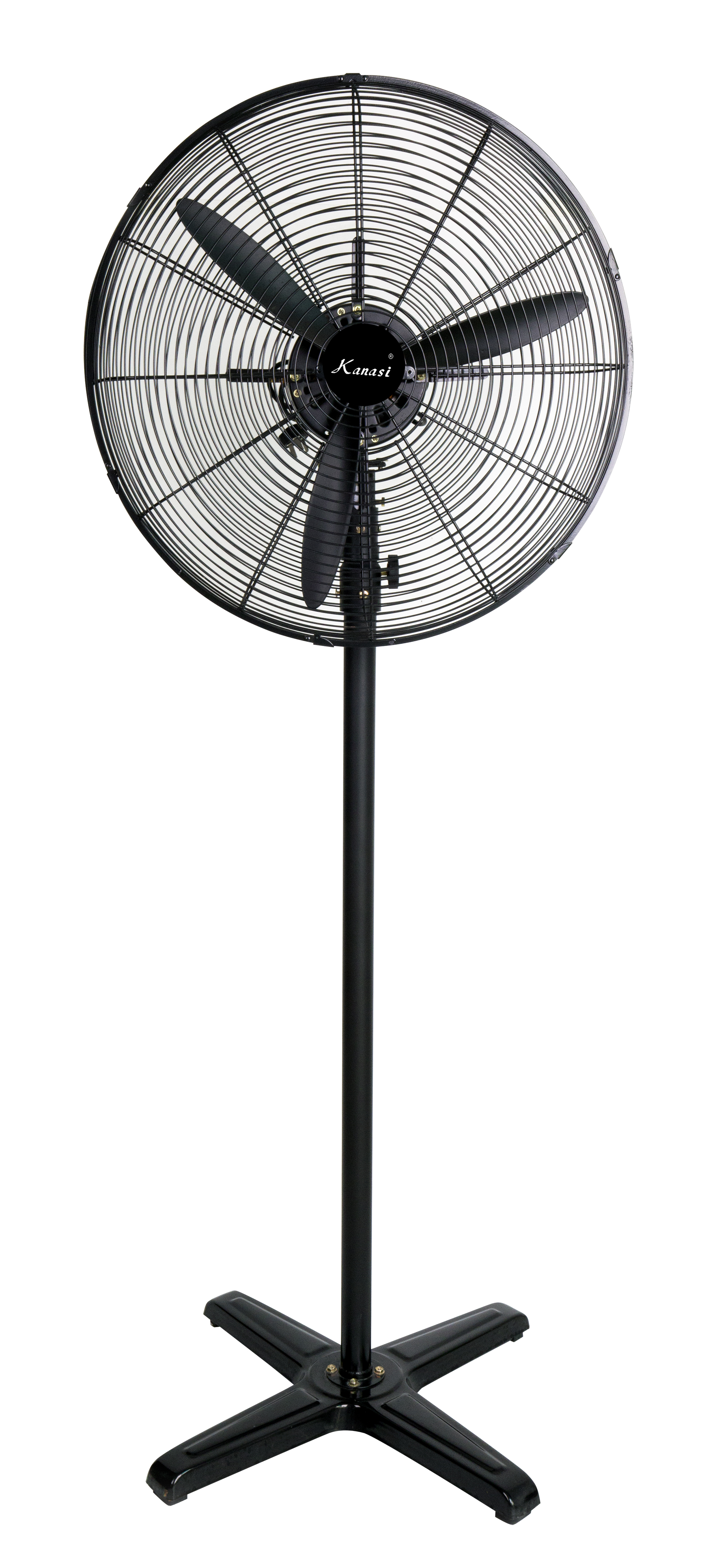
Any working garage fights three enemies at once: exhaust gases lingering after a test run, dust raised by brakes and bodywork, and heat pooling under a low ceiling. Industrial fan garage use tackles all three with deliberate, engineered airflow instead of waiting for open doors to do a job they were never designed for. The strategy below starts with what actually contaminates the space.
Why Garage Air Needs Active Management
Exhaust Gases and Particulates: The Invisible Load
Carbon monoxide and nitrogen oxides from engines, plus fine particulate from brake wear and diesel soot, accumulate fastest at breathing height. Dilution ventilation, replacing contaminated air with fresh air, remains the practical backbone of industrial fan garage use, because source-capture hoses alone cannot cover every bay. OSHA requires employers to keep airborne contaminants within permissible exposure limits, which in practice means deliberate mechanical ventilation, not open-door guesswork.
What ASHRAE 62.1 Brings to the Discussion
ASHRAE 62.1 defines ventilation rates for acceptable indoor air quality, a defensible starting point when sizing airflow. Many garage designs target six to twelve air changes per hour, with heavy diesel work pushing toward the high end. Practitioners of industrial fan garage use treat the standard as an engineering benchmark, while local codes always take precedence over any published figure.
Where Dust and Heat Fit In
Dust settles whenever air stagnates, and settled dust re-enters the breathing zone with every vehicle movement. Constant, gentle circulation keeps particles airborne long enough to be exhausted instead. Moving air also strips heat from engines, compressors and radiant ceilings, easing worker load through summer shifts.
Building a Workable Air Change Strategy
Calculate Before Buying Anything
Air changes per hour equal room volume multiplied by target exchanges. A bay measuring eight by fifteen metres with a four-metre ceiling holds roughly 480 cubic metres; at ten exchanges per hour the space needs around 4,800 cubic metres of air per hour, roughly 2,800 CFM. Every industrial fan garage use plan should start with this arithmetic, then spread capacity across several mid-sized units rather than one oversized unit.
Positioning Units for Cross-Flow
Industrial fan garage use delivers most when intake and exhaust sit at opposite ends. Exhaust units pulling air out one wall, with makeup air entering through louvres or doors on the far side, sweep contaminants away from technician breathing zones instead of stirring them in circles. Aim streams low for heavy vapours and across bays for general dilution.
Field Lesson From a Texas Fleet Garage
The maintenance manager of a truck fleet depot outside Dallas fought morning complaints: overnight engine warm-ups left the shop hazy, and dust from a gravel yard settled on freshly serviced components. Working with the building layout, the team installed industrial-grade units at the door end and intake shutters opposite, running low speed through shifts and high speed after each test start. Haze that once took forty minutes to clear began disappearing within ten, and dust-related rework complaints fell by roughly half over one quarter.
Choosing and Running Garage-Duty Equipment
Features That Survive the Environment
Garage air is abrasive and occasionally wet. Sealed motors with thermal overload protection, housings with a solid IP rating, fully guarded blades and a corrosion-resistant coating all extend service life where grit and moisture are daily facts. Hardware selected specifically for industrial fan garage use also tolerates continuous running, not just short bursts.
Habits That Keep Air Moving
Fans only work when they run on purpose. Run high speed after every test start, coordinate fan operation with door openings, clean guards monthly in dusty yards, and check bearings and fasteners on a simple schedule. Garages that log these small routines avoid the silent failures that leave bays hazy again.
Handled well, industrial fan garage use turns a hazy, dusty shop into a space technicians genuinely want to work in. The formula is unglamorous: calculate air changes honestly, position units for cross-flow rather than convenience, choose sealed and protected hardware, and keep a simple cleaning routine. Those habits cost far less than the health complaints and rework they prevent.
Frequently Asked Questions
Why does exhaust haze linger even with doors open?
Natural ventilation depends on wind and stack effect, both unreliable indoors. Haze lingers because engines keep adding carbon monoxide faster than passive openings can dilute it. Mechanical exchange replaces the full air volume on a schedule, which is why industrial fan garage use depends on driven airflow rather than passive openings.
How many air changes per hour does a repair shop need?
Light service work often manages on six to eight; heavy diesel repair, welding or bodywork pushes the target toward ten to twelve. Start from measured room volume and the contaminants involved, then add margin for peak workload. Treat any published figure as a starting point and adjust using how quickly haze actually clears.
Which mounting style works better in a garage, wall or floor?
Wall-mounted units keep bays clear of trip hazards and stay where the airflow plan needs them. Floor units move easily but get blocked by vehicles, knocked aside, and rarely stay where they were aimed. Most shops mix the two: fixed wall units for steady exchange, portable floor units for spot ventilation around a specific job.
Do garage fans help with dust as much as fumes?
Yes, though they attack it differently. Continuous circulation stops dust from settling on benches and freshly machined surfaces, while scheduled high-speed runs sweep the volume clean after dusty jobs. Filtered intake options add protection where the surrounding yard is the dust source. Fans alone never replace cleaning; the two habits work together.
Can a single large fan ventilate an entire shop?
Rarely, and it usually creates one strong jet with stagnant corners everywhere else. Two or three mid-sized units arranged for cross-flow move the same total air far more evenly, and they provide redundancy when one unit needs service. Size the combined capacity from the air-change calculation rather than shopping by blade diameter.